2026-10-25 · Jake Harlan
Choosing Dumpster Size for Orlando Home Renovation Projects
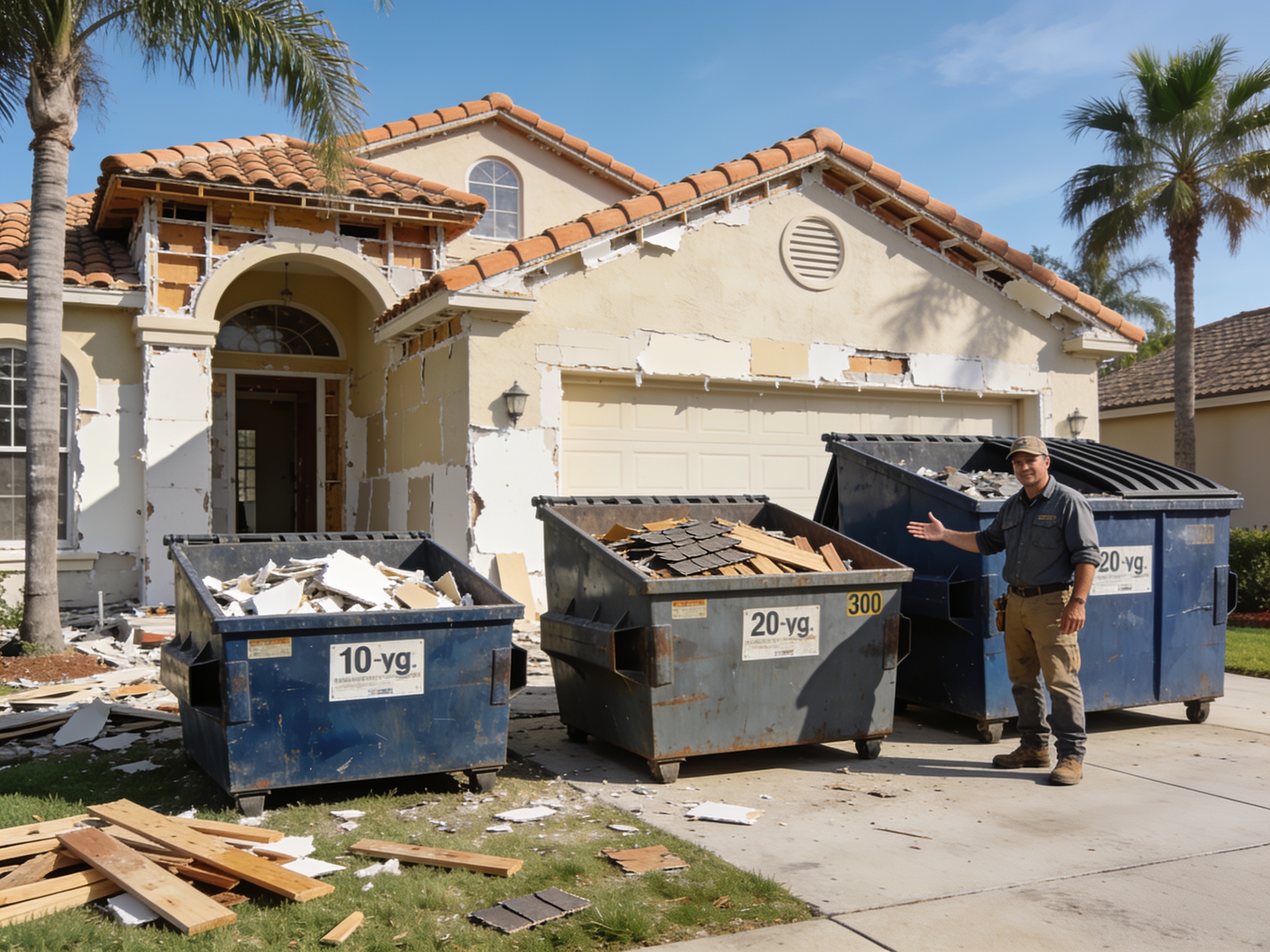
For most home renovation projects in Orlando, a 10-yard or 20-yard dumpster delivers the right capacity without excess cost. These sizes handle typical kitchen updates, bathroom remodels, or flooring replacements common across Orange County neighborhoods. Larger jobs such as whole-home gut renovations often need a 30-yard or 40-yard unit to stay efficient.
Assessing Your Renovation Project
Start by listing every material you plan to remove. A standard bathroom remodel in a 1950s College Park bungalow generates roughly 4-6 yards of tile, drywall, and fixtures. Kitchen updates in Thornton Park or Mills 50 homes often reach 8-12 yards once cabinets, countertops, and old appliances are added. Measure the square footage of each room and note heavy items like bathtubs or load-bearing walls that increase weight quickly. Orlando's older housing stock in Ivanhoe Village and Downtown Orlando frequently includes plaster walls and original hardwood that add bulk compared with newer builds in Baldwin Park.
Walk the job site and estimate how much debris will stack. A single-story ranch in Winter Park may produce less volume than a two-story home in the same neighborhood because upper-floor waste must travel farther to the container. Factor in any structural surprises common to pre-1970 homes such as asbestos-free but dense lath-and-plaster ceilings. These details help narrow the size before calling for delivery.
Common Dumpster Sizes and What They Hold
- 10-yard: ideal for small baths or single-room flooring removal; holds about 3-4 pickup-truck loads.
- 20-yard: best match for full kitchen or two-bath projects; fits 6-8 truck loads.
- 30-yard: suited to whole-home interior renovations; handles 9-12 truck loads.
- 40-yard: used when combining demolition and new construction waste; fits 12-15 truck loads.
Choose the smallest size that still leaves 6-12 inches of clearance at the top. Overfilling triggers extra fees and may violate local weight limits on residential streets near Lake Eola Park or the Orange County Courthouse.
Orlando-Specific Factors That Change Sizing
Many homes in College Park and Winter Park sit on narrow lots with limited driveway space, so a 20-yard container often fits better than a larger unit. Afternoon thunderstorms common in Orange County's humid subtropical climate can soak uncovered debris and add hundreds of pounds of water weight. Placing the dumpster on a tarp or under a temporary cover prevents this extra load. Soil in older neighborhoods tends to be sandy and soft after heavy rain, so request placement boards to avoid sinking on driveways near Harry P. Leu Gardens or Dr. Phillips Center.
Projects in nearby Winter Park or Altamonte Springs sometimes require slightly larger sizes because homeowners combine interior work with yard debris from mature oak trees. Kissimmee homes built on slabs may generate more concrete rubble than frame homes farther north. These local differences make an on-site assessment more reliable than generic online calculators.
Planning Delivery Around Local Conditions
Schedule drop-off early in the week so the container is ready before weekend work begins. In Orange County, afternoon storms peak from June through September, so coordinate with Scheduling Dumpster Rental Around Orlando Rainy Season to avoid rain delays. Check driveway width and overhead power lines before the truck arrives, especially on narrow streets in Mills 50 or Ivanhoe Village.